

In this article
A missing or incorrect label can put a working home battery in the “substandard” column. In its 2025–26 report, the Clean Energy Regulator found that labelling accounted for 49.4% of findings that needed fixing on substandard battery jobs. It was the largest category. One installation can have several findings. See Figure 4 of the inspection report.
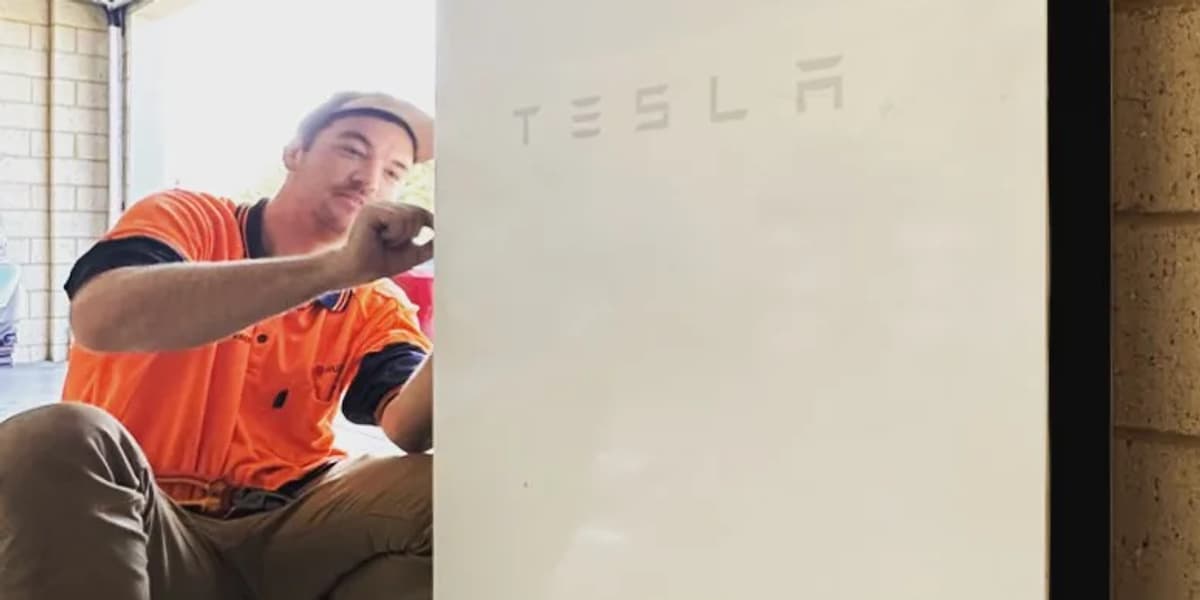
Derek McKercher, an electrician and founder of PSW Energy, says he sees plenty of sound electrical work from specialist solar installers. As more crews take on batteries, he sees the number of labels each job can require as a challenge. The labels have different jobs, from alerting emergency crews that there’s a battery on site to showing an electrician which circuits have backup power.
What the inspector looks at
Start with the wall around the battery and the outside of the switchboard. The inspector looks at where the battery sits, what could strike it and whether the right labels are in the right places.
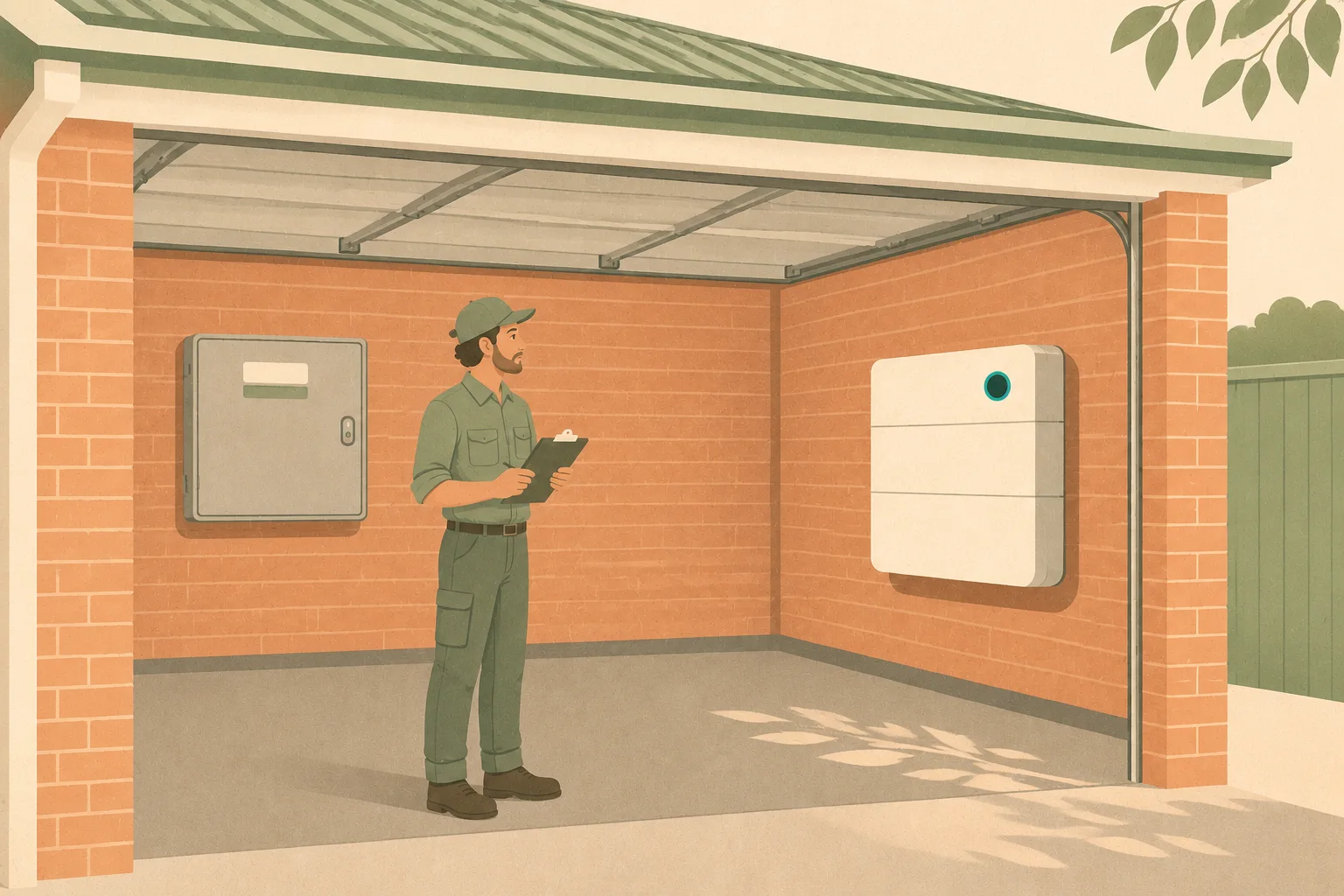
- What you can see
- Your installer can point out the energy storage identification label, explain the shutdown information and identify which circuits are backed up if your system has that feature. Ask what to keep clear around the battery and what protects it from knocks.
- What the electrician checks
- The electrical checks cover how wiring is protected and whether protective devices work as intended on the backup supply. A tidy cable run or a working monitoring app can’t tell you how the circuit will respond to a fault.
From 1 March 2026, the regulator began requiring photos of critical labels for battery installations claiming small-scale technology certificates. See the regulator’s photo requirements.
What the ratings mean
The Clean Energy Regulator’s first annual report covers 3,425 battery inspections for systems installed from July 2025 through April 2026. It reports the 3,373 randomly selected inspections separately from 52 additional inspections. The figures below use the random sample.
- The inspector found the installation met the required standards.
- The installation can stay in operation. The installer must fix the issues identified.
- The inspector shuts the system down or otherwise makes it safe.
The substandard rate counts installations. The labelling figure counts individual findings on substandard jobs. A job can have a labelling finding alongside a wiring or protection issue. Ask the inspector or electrician to explain each finding and what needs to be fixed.
The regulator’s later snapshot recorded 521 inspections in WA out of 4,322 nationally to 30 September 2026. That gives a sense of how much inspection work had been done in WA by that date. What an individual home needs still comes down to its equipment and installation. See the September snapshot.
What to keep at handover
Before the installer leaves, ask them to show you where to find your system information and who to contact if something changes. Keep those details with your installation paperwork.
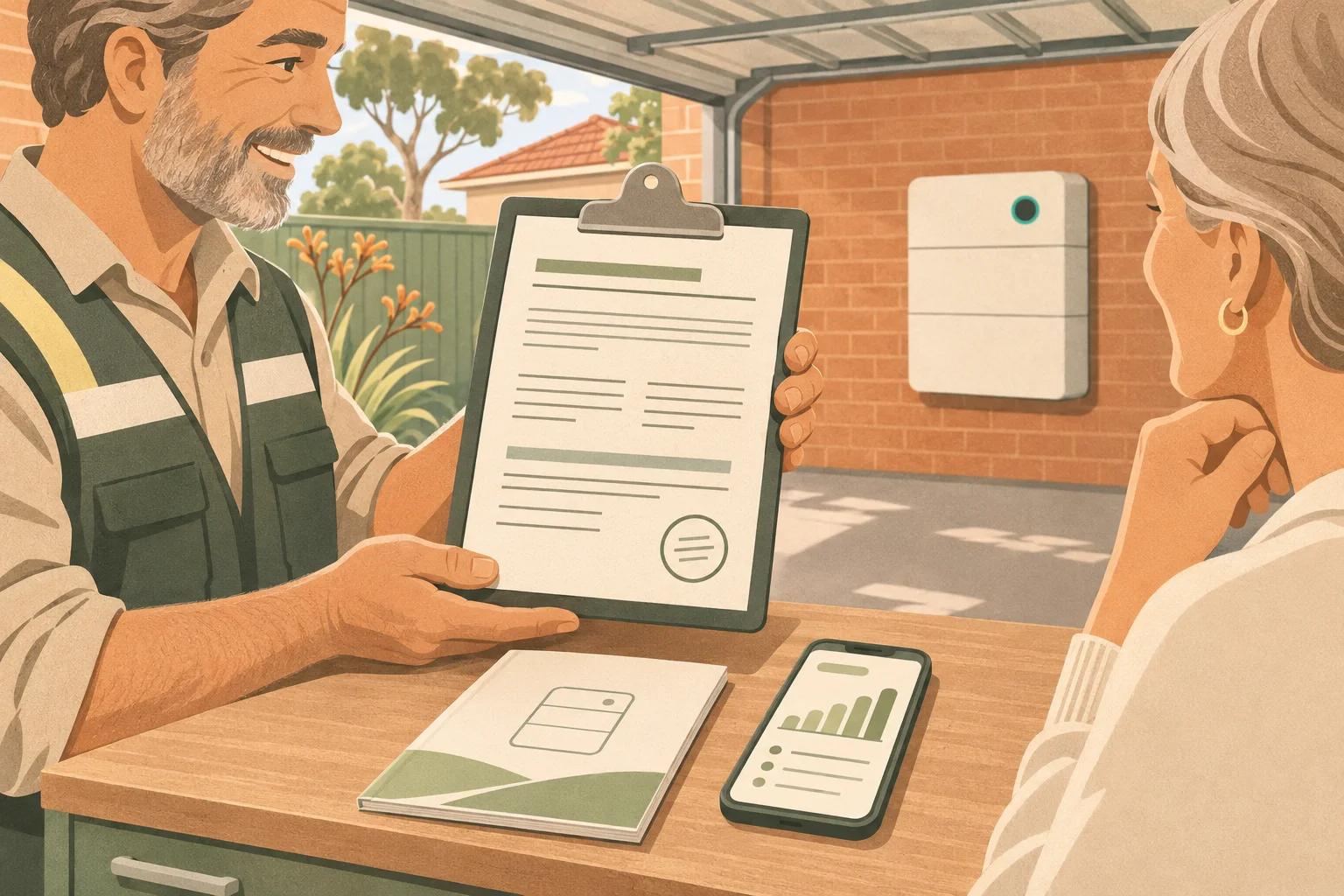
- Electrical Safety Certificate
- In WA, the electrical contractor must give you the certificate within 28 days of completing this installation work. Ask how they’ll send it. Building and Energy WA explains the requirement.
- Equipment and backup details
- Keep the equipment models, warranties and operating instructions. If the system provides backup, ask which circuits are included and where that is written down.
- Monitoring and support
- Have the installer show you normal operation in the app, how an alert appears and who to call if you need help.
When to call the installer
Contact the installer if the certificate hasn’t arrived, a label is missing or unclear, backup behaves differently from the written scope, or the app repeatedly shows a fault. Share the model, the message you saw and what happened before it appeared. Ask for a written account of any finding and what they did to address it.
If you’re concerned about electrical safety or compliance, Consumer Protection WA directs homeowners to Building and Energy. If there’s smoke or fire, move to safety and call Triple Zero (000). See DFES battery safety guidance.
Sources and further reading
References checked .
- Clean Energy Regulator · Full 2025–26 inspection report, Figure 4
- Clean Energy Regulator · Photo requirements for critical battery labelling
- Clean Energy Regulator · Solar battery inspection results to 30 September 2026
- Building and Energy WA · Electrical safety certificates
- Building and Energy WA · Battery installation guidance
- Consumer Protection WA · Buying solar panels and home batteries
- DFES · Lithium-ion battery safety