
In this article
A battery’s storage figure cannot tell you what stays on in a blackout. That depends on the circuits connected, the power the system can deliver and how you use it.
What changes when the grid fails?
After sunset, a grid-connected battery can supply the home with the grid making up any shortfall. During an outage, the backup installation separates the supplied circuits from the grid. The system then has to support them within its own limits.
Same home.
Different backup connection.
Choose a connection, then see what changes in an outage.
The grid can supply all shown circuits. The battery’s contribution depends on its settings, charge and power limits.
*A backup connection does not mean every appliance can run at once. Larger loads need their own power and duration checks. Circuit inclusion only, not a wiring diagram, equipment rating or design for your home. Rooftop solar is shown for context; its outage contribution depends on the system design.
Compatible solar may help during daylight if the system is designed to operate during an outage. The Australian Government’s design guide explains the installation requirements.
Will the changeover interrupt power?
Blackout protection
The home may lose power briefly while backup takes over. Some systems pause for seconds; others transfer much faster. Lights may dip and appliances may restart. That can make the outage noticeable, but behaviour depends on the system and installation.
Uninterrupted power
A UPS is designed to bridge interruptions for connected equipment, such as a computer or router. Some types still have a short transfer time; online double-conversion units can avoid it. Check the UPS type, compatibility, load and runtime.
Manufacturer guidance: Fronius backup operation and Schneider Electric UPS transfer times. Home battery backup does not, by itself, promise an uninterrupted supply.
How much power, and for how long?
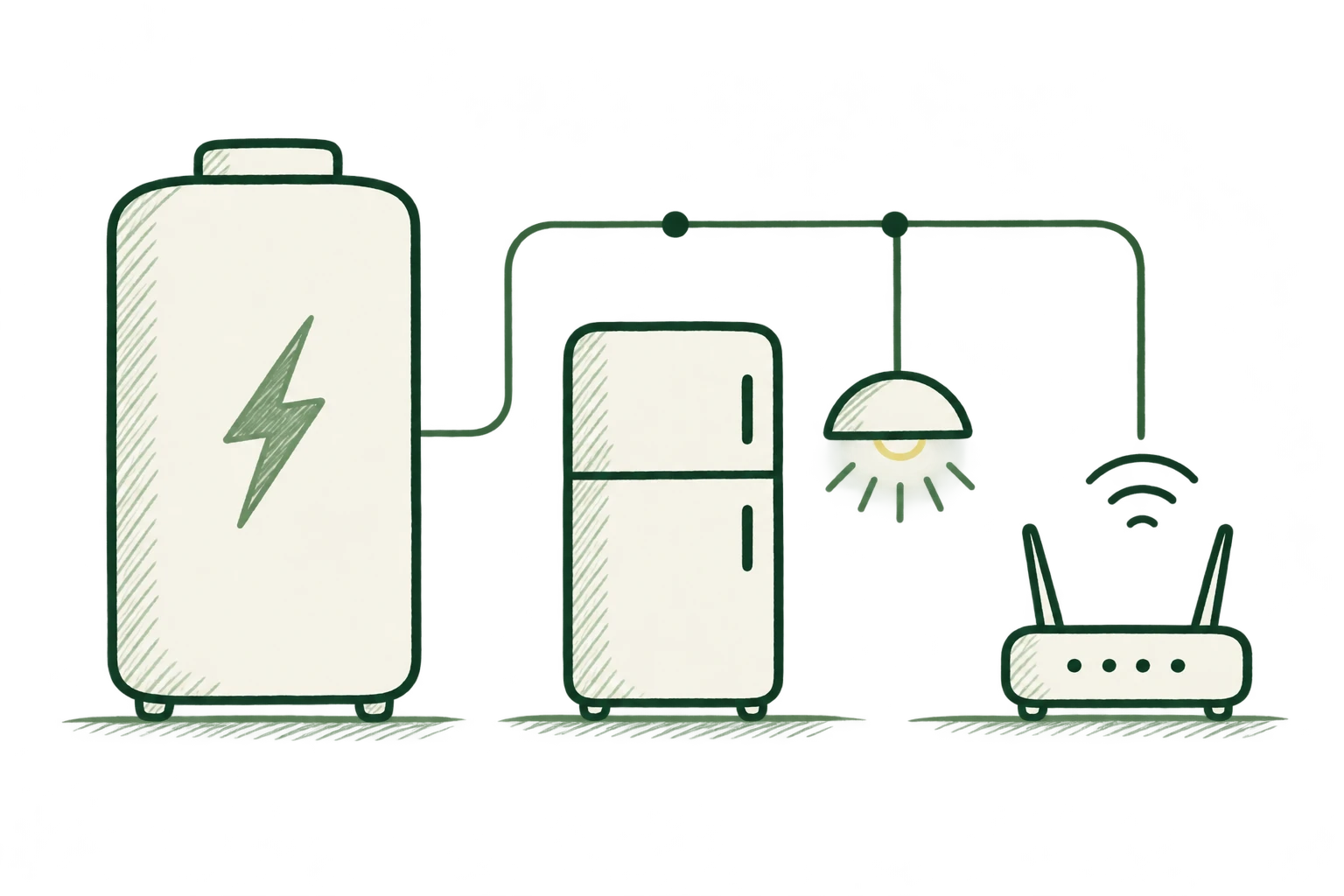
What can run together?
The system’s output limits the load it can supply at once. A motor starting can need more than it draws while running.
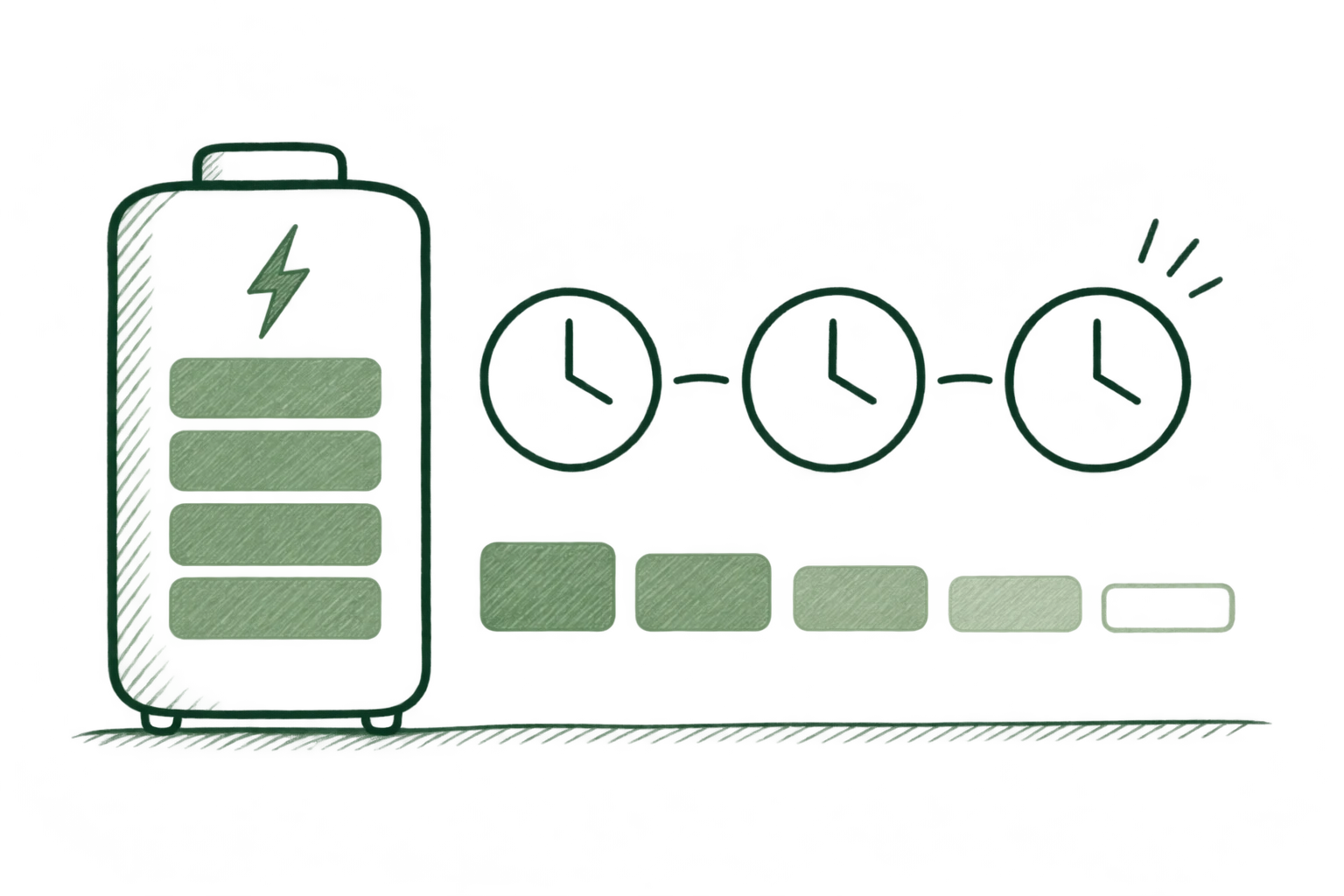
How long could it last?
The energy available when the outage starts affects duration. Higher demand uses that energy more quickly.
More storage can extend backup duration without increasing output. With some systems, additional battery modules also increase available power. Check the complete battery and inverter combination.
A backup reserve holds stored energy for an outage. It does not add output or connect extra circuits. Our battery-sizing guide covers the separate capacity decision.
Three phases need a closer look
A three-phase home has circuits spread across its phases. Some equipment needs all three. Keeping selected single-phase appliances running can be a sensible backup brief, but it does not establish that a three-phase air conditioner or heat pump will work.
A single-phase battery generally backs up circuits on its connected phase. Reducing metered grid use across phases is a different function from supplying those phases in an outage. See the Australian Government’s inverter guide.
Three phases.
One phase on backup.
A single-phase backup example in a three-phase home.
- 1Phase 1Battery backup
Lights, fridge & internet
Example selected circuits - 2Phase 2No backup supply
Other household circuits
Not powered during this outage - 3Phase 3No backup supply
Other household circuits
Not powered during this outage
Equipment that needs all three phases
Not backed up by this single-phase example.
Example circuit locations only. Selected circuits still need a backup connection and must fit the system’s limits. Three-phase backup is possible with a suitable system; check its phase ratings and connected loads. Not a wiring diagram.
Check the output on each phase
A total inverter rating is not the power available to one appliance on one phase. Check continuous backup output, permitted phase imbalance and starting-load allowance. Dividing the total by three is not a universal rule. Sigenergy’s per-phase guidance shows why the exact model and operating mode matter.
Why we prefer a separate gateway
For whole-home backup in WA, our installation team prefers compatible gateway hardware beside the switchboard. We want the mains connection, isolation, changeover equipment and cable route considered together, close to the existing supply.
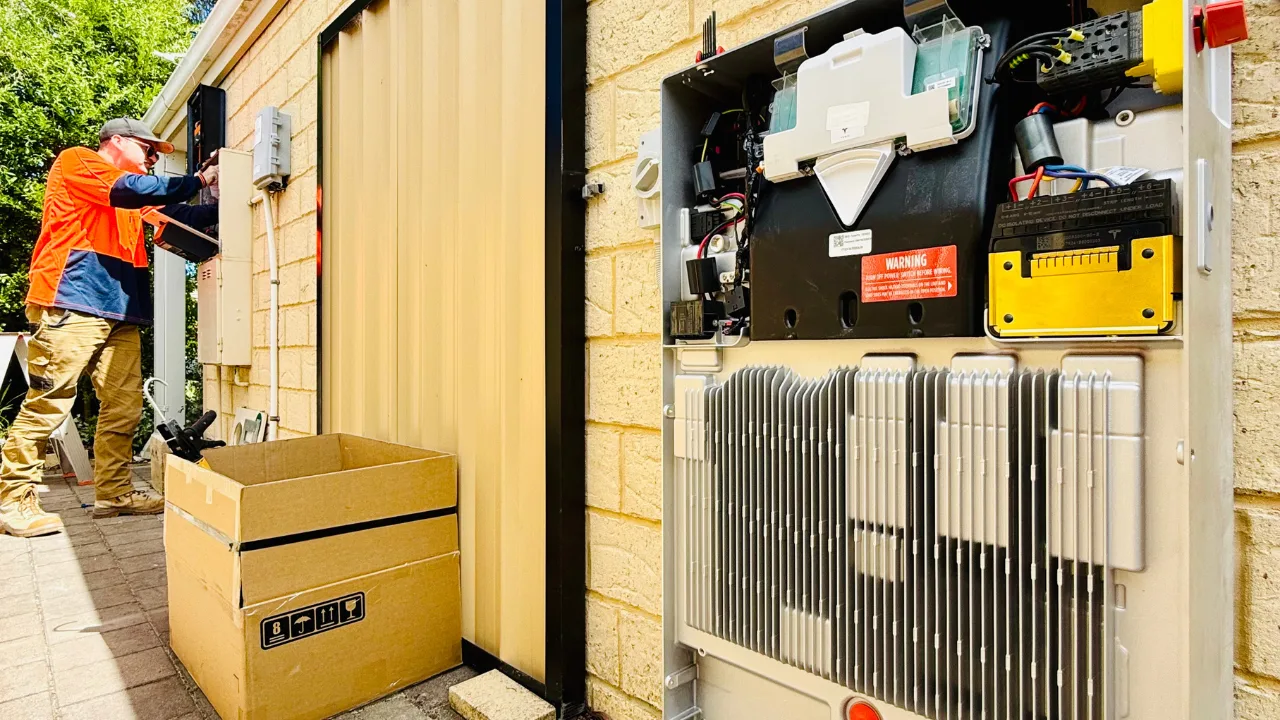
Integrated backup can suit an installation. We still check how the home connects through it, the switchboard work required and the pass-through current: the current permitted through the relevant connection while the grid is present. That is a different rating from battery output during an outage.
A gateway does not add inverter power or guarantee every phase is backed up. For example, Tesla’s Australian Powerwall 3 / Backup Gateway 2 design guide specifies single-phase backup and excludes three-phase loads.
Which air conditioner do you mean?
On a hot Perth evening, keeping the bedroom cool is a different request from running ducted cooling throughout the house. Give the designer the exact model, its supply type and the other appliances you expect to use alongside it.
The checks are running demand, starting requirements and available energy. A cooling-capacity figure in kW is not electrical input. Air conditioning, ovens, floor heating and EV charging can use stored energy quickly; leaving large loads off gives the basics more time. If cooling is essential to your brief, have it assessed before choosing equipment, and ask what a simpler backup option would cost.
Get the backup scope in writing
A whole-home connection still has power and storage limits. Agree what can run together and which large loads to leave off. Ask for these five things in your written quote.
Circuits included
Named circuits, their phases and what is excluded.
Power available
Continuous output on each phase, motor-starting allowance and loads that can run together.
Duration assumptions
Usable stored energy, reserve settings and the demand used to estimate duration.
Changeover behaviour
Expected interruption and any appliances that may need restarting.
Installation work
Gateway or switching equipment, pass-through ratings, cabling and switchboard work.
Approved-product status and rebate eligibility do not settle these design checks. Explore solar and battery together or adding a battery with your backup brief in mind.
Already have backup that isn’t working as expected?
Keep the quote, circuit list and written promises. Note what happened, what was running and what the app showed. An overload, a configuration issue and a fault can look similar. Have the supplier assess the cause before buying more storage.
Use the operating instructions. Do not open electrical covers or change installer settings to investigate. If PSW installed the system, contact PSW Life Support.
Consumer rights depend on the problem and whether it concerns the product, installation service or both. The ACCC explains repair, replacement and refund remedies. A refund is not automatic for every backup complaint.
Sources and review notes
Reviewed 7 November 2026. First published 17 August 2026. Diagrams illustrate circuit inclusion, not wiring, equipment ratings or a design for your home. The gateway preference is PSW installation-team guidance; product capabilities require current Australian model documentation.
- Australian Government: system design and outage supply
- Australian Government: single- and three-phase inverters
- Australian Government: battery capacity, power and backup
- Solar Victoria: backup loads and specialist medical advice
- Schneider Electric: UPS transfer times
- Fronius: backup operation and interruptions
- Sigenergy: per-phase output guidance
- Tesla: Australian Powerwall 3 and Backup Gateway 2 design considerations
- ACCC: remedies for products and services