


In this article
Start with the inverter you already own. If it supports a suitable battery and can be approved in the final setup, you may only need to add storage. A solar-only inverter changes the job. The battery needs its own inverter, or the solar inverter can be replaced with a hybrid.
In Perth, the choice often comes down to whether the existing equipment can work with the new system under current connection rules. PSW often recommends a new hybrid where getting third-party equipment to work together would add cost or leave a setup that’s difficult to support. The panels can stay if their condition, compatibility and compliance check out.
Three ways to connect the battery
DC-coupled storage connects to a compatible hybrid inverter on its battery side. AC-coupled storage has its own inverter and connects alongside the solar inverter on the home’s AC supply.
A new hybrid runs solar and storage.
Keep the panels if they are compatible and pass inspection. Replace the old inverter with a hybrid and connect its supported battery on the DC side.
Simplified connections. Your installer specifies the site controls and backup switching.
Check before quoting. Confirm the condition and electrical specifications of the retained panels, plus the approved inverter and battery combination.
The switchboard can change the quote
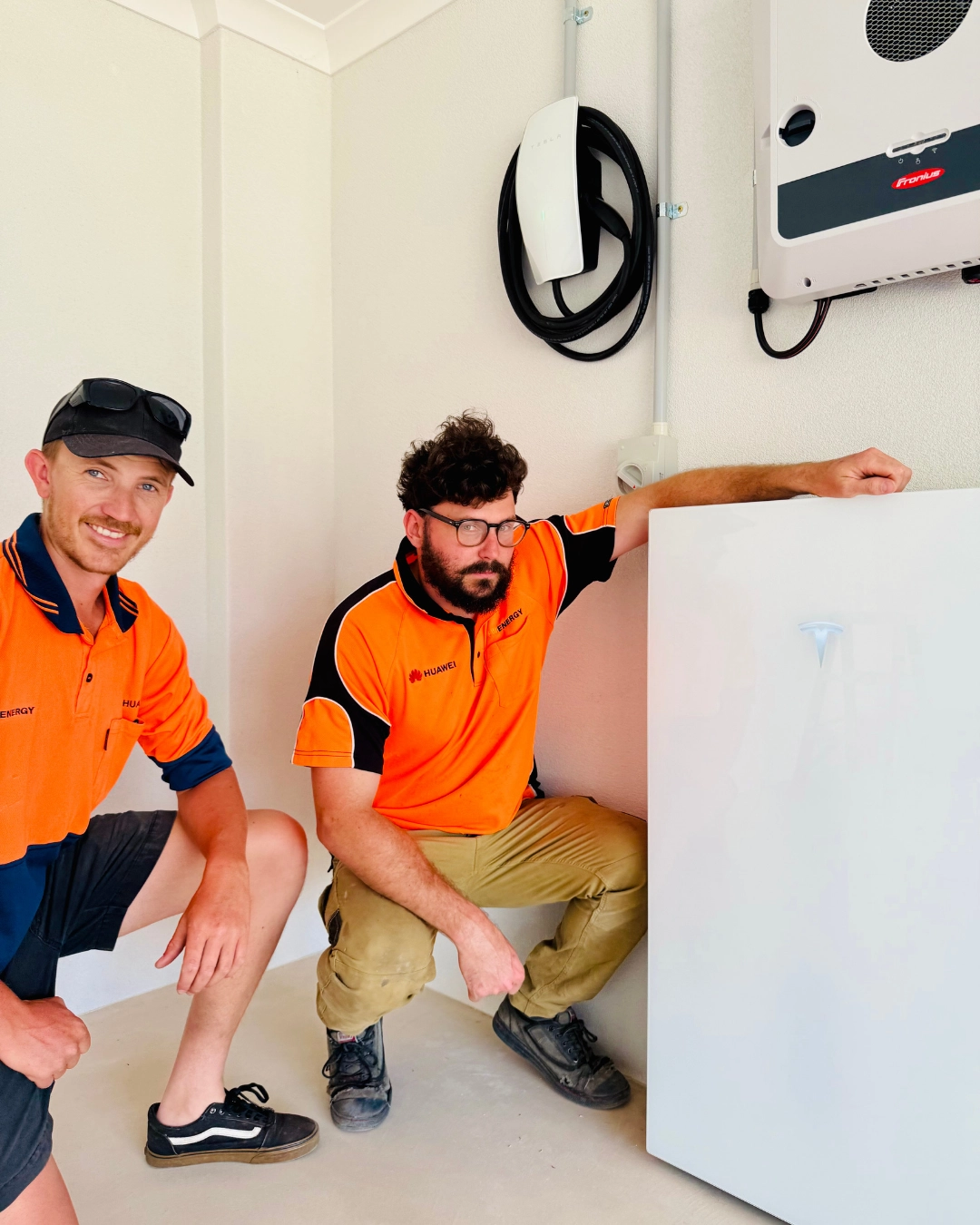
Older switchboards often had room for a few circuits. Add an EV charger, air conditioning, solar, storage and a pool pump and there may be little room for extra protection or backup switching. Getting a close look at the board early helps separate the cost of the battery from the electrical work the house needs.
Five years is a prompt to look closer. When solar panels are more than about five years old, PSW checks the product specifications, condition, records and wiring closely, especially where a rebate is part of the quote. Age alone doesn’t decide whether panels can stay. If replacement is recommended, ask what would prevent reuse and how the old panels will be handled.
A clear photo of the accessible inverter label and the front of the switchboard is a good start. Leave covers in place. Your installer can use those photos to check the inverter model, look for space for new equipment and flag what needs an on-site assessment. Check your supply type.
Size the battery from day and night
Pull a few days from your inverter app or your retailer’s interval data. Look for solar exported during the day and electricity imported from sunset to morning. If you can, compare different seasons and any changes you’re planning, such as an EV or a heat pump.
- Sunny day · solar exported
- 8 kWh
- Winter day · solar exported
- 3 kWh
- Overnight · grid import
- 6 kWh
In this example, the sunny day leaves enough surplus to cover much of the overnight use. On the winter day, a larger battery still has only 3 kWh of rooftop surplus available before charging losses. It might make sense to review a bigger array or a tariff that allows cheaper grid charging before paying for extra storage.
Connection approval and rebate eligibility
For a Perth home, the installer checks the entire proposed setup with Synergy and Western Power, including equipment you plan to keep. A listed battery or a working inverter is only part of that assessment. An AC-coupled design needs a supported way to manage the retained solar inverter as well as the new storage equipment. The installer must also check the total inverter capacity and any limits that apply to the site or to individual phases.
- WA scheme
- Check the equipment combination, accredited vendor and eligible virtual power plant (VPP). Your retained solar may need changes to meet remote-management and electrical requirements. Read the VPP agreement before committing.
- Federal program
- The battery can be installed with suitable existing solar. The existing PV system must meet state electrical safety rules. Ask for the certificate discount and its eligibility assumptions to be shown separately in your quote.
Connection approval and rebate eligibility are separate checks. See the WA and federal rebate guide.
Backup belongs in the design
Tell the installer which circuits you want running during an outage. Ask for the backed-up circuits, starting loads, expected runtime and whether solar can recharge the battery while the grid is down. Output in kW affects what can run together. Available energy in kWh affects how long it can run.
A battery’s backup can briefly interrupt power during changeover. If you rely on medical equipment, ask your care provider and equipment supplier about a suitable outage plan. Build your blackout brief.
A quote that shows what stays
A fair comparison sets out the retained and new equipment by model, the total installed price with GST, and any upgrade or rebate assumptions. Ask the installer to put these details in writing.
- Equipment and work
- Panels, inverter, battery and controls. Include cables, metering, switchboard work, removed equipment and backup circuits.
- Approval and handover
- Retailer and network approvals, commissioning, monitoring, VPP setup and any ongoing charges. Keep the final equipment list and compliance records.
- Warranty and support
- Separate the cover for retained equipment from the new products and installation. Identify who handles a claim and which labour costs are covered.
Have your inverter model, photos and a recent bill handy when you request a retrofit quote.
Sources and connection checks
- Energy Policy WA retrofit options · Hybrid, non-hybrid and multi-inverter arrangements for existing systems.
- Synergy supported solutions · Equipment combinations and whole-site control.
- Western Power battery connection guidance · Existing equipment and total inverter capacity.
- WA scheme eligibility and Clean Energy Regulator battery requirements · Separate state and federal criteria.