

In this article
Your export credit does not show everything your solar has saved. The electricity you use before it reaches the meter has already reduced what you need to buy.
DEBS is the Distributed Energy Buyback Scheme. It pays eligible Synergy customers for electricity sent to the grid, with a higher rate in the late afternoon and evening. It is an export payment, not the rebate that reduces the cost of installing solar or a battery.
Give your solar something useful to do.
“Self-consumption is the key to reducing energy bills where daily utilisation is expected.”
 Derek McKercherElectrician, founder, and director, PSW Energy
A VPP agreement can change the value of stored energy, so compare its payments and operating conditions alongside your household savings.
Start with electricity you already need to use. A daytime pool-pump cycle, a load of washing or charging the car while it is home may use solar that would otherwise leave the property. Running something unnecessarily still wastes energy.
Use it now
For electricity your household already needs in daylight.
Keep it for later
For later use at home or an agreed battery export.
Export the surplus
DEBS credits and any agreed VPP payments, within your connection limit.
Self-consumption and VPP participation can work together. The balance depends on the household and the agreement. Heating water stores energy as heat; charging an EV stores it for driving. Neither automatically gives your house electrical backup. A home battery has a different job, with its own cost, losses and operating limits.
Two export rates. A different value at home.
Synergy’s published DEBS rates are 10c/kWh between 3pm and 9pm, and 2c/kWh at other times. These are the rates in the schedule effective 1 July 2026, checked on 11 November 2026. Your contract and eligibility still apply. Synergy DEBS price schedule.
DEBS-only example · Home Plan A1
The same solar. Two uses.
Compare direct household use with an ordinary DEBS export. VPP payments are not included.
Electricity you would not need to buy
Credit on an eligible DEBS account
$3.13 more value from direct use in this DEBS-only example.
This is not a VPP comparison. A1 avoided imports at 33.2621c/kWh, including GST; DEBS exports at 2c or 10c/kWh, excluding GST unless applicable under the terms. Prices effective 1 July 2026. Residential example with no GST added to export credits. This compares the same energy once, excludes supply charges and equipment costs, and does not model battery losses or payback. A1 rates · DEBS rates.
This is a DEBS-only comparison, not a VPP earnings estimate. The difference is an avoided purchase, not a bonus payment, and only applies when solar replaces electricity you would otherwise buy. Your daily supply charge remains. A different import tariff or a VPP agreement changes the calculation. Compare the VPP arrangement.
Read the credit in context.
On your bill, look for exported units, the buyback rate and the dates covered. If you participate in a VPP, check its activity statement and payments as well; the DEBS line alone may not show the full return. A unit is one kWh. Check the reading type and any adjustments too. The example below separates the export credit from the savings you will not see as a credit.
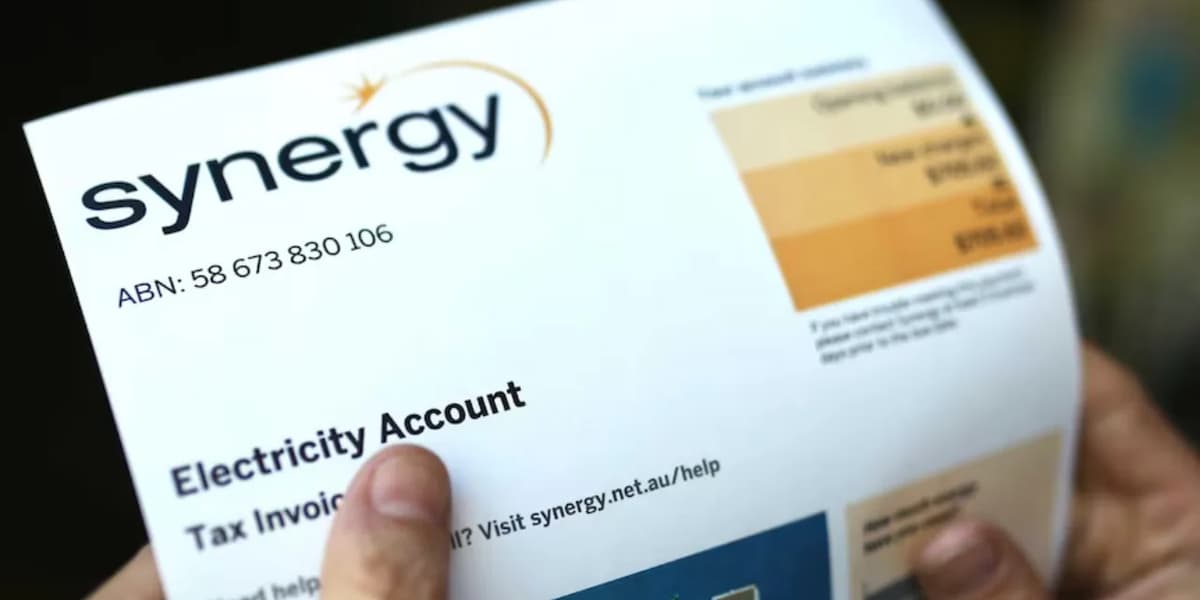
Illustrative export credit · not a customer bill
550 kWh exported. $15 credited.
These are billing-period totals, assumed spread within the daily buyback limit. This is not a daily export example. No GST is added to the export credit.
The credit does not include the value of solar used at home. Nor is it the amount of the whole bill: imports, supply charges and other adjustments sit separately.
Compare exports with exports.
A generation total in your inverter app is not the same as exported energy on the bill. Some solar was used at home. A system with suitable consumption monitoring can show imports and exports separately; compare the same measurement over the same dates. There is no universal percentage difference that proves the readings are right. Australian Government monitoring guide.
If a credit is missing or the rate looks wrong, ask Synergy to check the account, metering status and billing period. An estimated reading may need investigation; do not assume a later bill will resolve it. For a PSW-installed system with missing monitoring data or an equipment fault, PSW Life Support can help with the equipment side.
Eligibility is a separate check.
Energy Policy WA identifies eligible customers as residential users consuming no more than 50 MWh a year, educational institutions and non-profit organisations. Its published DEBS guidance describes renewable generation above 500 W and up to 5 kW; a 6.6 kW panel array on a 5 kVA inverter is accepted as 5 kW generation.
That guidance sets no battery or EV battery capacity limit for DEBS eligibility. The buyback obligation covers the first 50 kWh exported per day per premises. It is an energy allowance, not a 50 kW power limit. Energy Policy WA eligibility guidance.
Synergy’s DEBS terms govern the agreement. Battery capacity alone is not enough to confirm that an entire proposed system qualifies.
Applications and metering.
You or your installer can apply through Synergy. For a new installation or upgrade, have the retailer and Western Power connection approvals checked before work proceeds. Keep the accepted system details, application reference and any metering advice with your installation records.
Commissioning the equipment and starting the buyback agreement are different milestones. Synergy’s terms link commencement to the connection conditions being met and the necessary system and metering being ready. Ask for your account’s status rather than relying on a fixed number of weeks.
A temporary export credit may apply while a required meter upgrade is pending. Synergy publishes 7.135c/kWh for that arrangement; confirm whether it applies to your account. Synergy’s DEBS application information.
Metering fees to confirm
The July 2026 DEBS schedule lists a $108.84 meter upgrade and a $111.60 reprogramming fee where required, including GST. Additional communication equipment can cost extra. Ask Synergy which fees apply before accepting an estimate.
The administration fee differs between Synergy’s DEBS PDF and its Home Plan fee page at this review. We have not chosen one as definitive. Check the fee quoted for your application. DEBS schedule · Home Plan fees.
Storage with a job to do.
A battery can move spare daytime solar into the evening. Before choosing one, look at energy left after daytime use, electricity bought after sunset and the amount you want held for backup. Winter generation matters as well as a strong summer day.
Avoided imports are only part of the calculation. Allow for lost export credits, charging and discharging losses, installed cost and usable capacity over time. A low feed-in rate alone does not make every battery purchase worthwhile. Solar Consumer Guide: solar and battery savings.

A VPP changes the calculation.
A VPP can pay for battery access or agreed exports. Think about the same stored energy in everyday situations:
- Your usual evening
- The battery runs the fridge, lights and TV. Its financial value is the electricity you do not need to buy.
- A VPP event
- Some stored energy goes to the grid for an agreed payment. That return can be worth more than keeping those units for home use, depending on the offer.
- The hours afterwards
- If you need to buy extra electricity because the battery has less charge, include that cost. Compare what you earned with what you spent.
Compare total costs and credits over the same period, including fees, battery losses and cycling. Keep a joining discount separate from recurring earnings. Event payments are not an everyday export rate.
For example, Synergy says eligible DEBS customers in Battery Rewards continue receiving DEBS credits, with activation credits paid in addition. That is a feature of that offer, not a rule for every VPP. Check the current Battery Rewards information and the Battery Rewards agreement before combining payments. Synergy provides different versions according to when you joined; other VPP providers have their own terms.
Also check battery access, any backup reserve, warranty conditions and exit terms. Operating schedules must respect the approved site controls and retailer requirements. The Australian Government’s Solar Consumer Guide explains the different benefits and trade-offs.
Use your own import tariff.
DEBS pays for exports. Your electricity plan charges for imports. The example above uses Home Plan A1; it is not a Midday Saver calculation. Compare a whole year of your usage, the time bands and the daily charge before changing plans. A cheaper midday rate can be offset by dearer evening use.
Connection requirements from May 2026.
New or upgraded solar and battery systems on the South West Interconnected System must meet the requirements introduced from 1 May 2026. Communications capability, testing and approved equipment matter; an unchanged older system is a different case from a new upgrade.
The WA Government describes a standard 1.5 kW export option after installation testing for customers not maintaining ongoing connectivity or choosing export products. Flexible exports depend on connectivity and the relevant operating arrangement. A communications-loss fallback is not the same as deliberately selecting the fixed-export option.
Keep three things separate in your proposal: the equipment capacity, the permitted generation and exports, and the payment agreement. None can be established from the panel count or the home’s phase count alone. WA Government consumer connection guidance.
An existing REBS account.
REBS is closed to new applications. An existing customer may remain on it subject to their terms, but changing the system can affect that position. Ask Synergy to confirm the effect of adding a battery, replacing an inverter or changing generation capacity before committing. Do not assume the old rate transfers to a new configuration. Synergy REBS guidance.
This article’s prices are for Synergy customers. Regional Horizon Power customers should use Horizon Power’s solar and buyback information; the offer, town and account conditions need their own check.
A few useful checks.
A small credit, with working solar
A small credit can mean little was exported or most exports fell in the lower-rate window. It does not establish total solar savings. Look at generation, household use, imports and exports together before deciding the system is underperforming. For a VPP account, include its payments and activity statement too.
More export is not always the goal
Outside a VPP, using solar for an existing need can be worth more than the ordinary DEBS export credit. With a VPP, an agreed battery export may offer a different return. Compare your own tariff, payments and household needs. Do not create unnecessary demand just to avoid exporting.
Adding a battery to working solar
The existing inverter, panels, switchboard and connection approvals need assessment. A battery’s headline capacity does not settle compatibility or the value to your home. Explore adding a battery.
Sources and review notes
Reviewed 11 November 2026. Rates and connection arrangements can change. Examples explain the calculation; they are not a household forecast or a battery payback estimate.
- Synergy DEBS price schedule, effective 1 July 2026
- Synergy Home Plan A1, effective 1 July 2026
- Synergy Battery Rewards agreement versions
- Synergy Battery Rewards: DEBS and activation credits
- Synergy DEBS terms, including May 2026 connection requirements
- Energy Policy WA: energy buyback schemes
- WA Government: requirements for solar and batteries
- Australian Government: monitoring your solar
- Australian Government: solar and battery financial benefits
- Synergy: existing REBS agreements
Derek McKercher’s contribution is his first-hand PSW perspective, supplied for this revision. The bill below the rates is an illustrative calculation, not a customer account.