
In this article
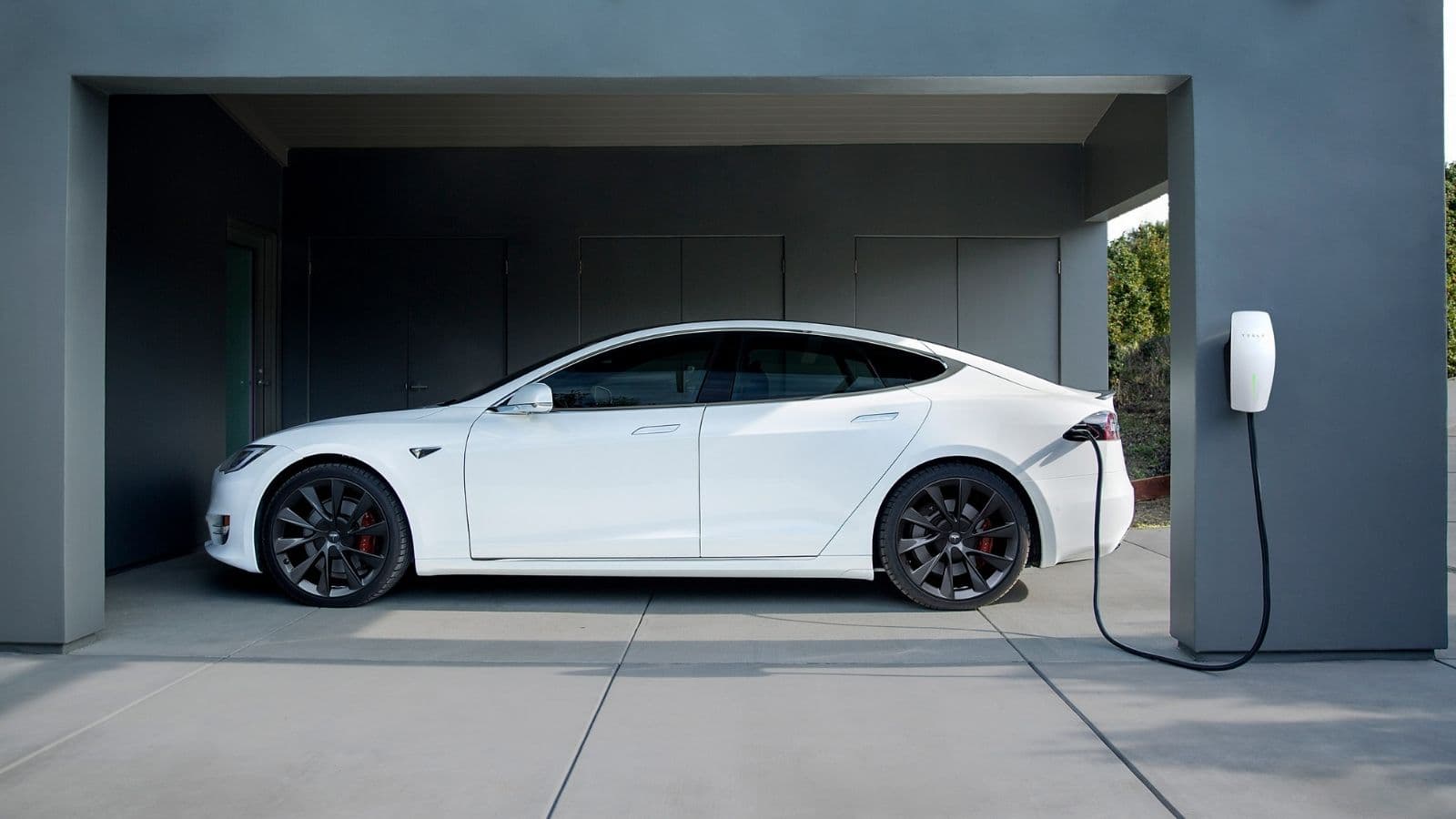
Plug in when you arrive home. Use the solar still available, or let your charging controls wait for a suitable low-cost window. Think of it as topping up where the car is already parked.
Start with your week.
Derek McKercher starts with the customer’s likely charging pattern: when the car is home, how far it travels and when it needs to be ready. Those answers help decide whether surplus solar, a charging schedule or a different electricity plan will do the most useful work.
Arriving home at 4 or 5pm does not necessarily mean you have missed the solar. There may still be generation available, particularly in a Perth summer. Plugging in makes the car available to use it; the charging settings decide whether to start or wait.
- Home in daylight
- Look for regular windows when the car can use surplus generation. Work-from-home days can be useful, even if they are only part of the week.
- Home after dark
- Plan a dependable charge in a suitable low-cost window. An EV tariff may be worth comparing if you cannot use much daytime solar.
- A different weekend
- Daytime charging on days off can contribute to the week's driving. Check whether that fits your mileage and the charge you need between those opportunities.
This is destination charging: topping up while the car is parked at home or work, rather than waiting for a dedicated refuelling stop. You do not have to fill it every night; replace what your driving needs, with enough margin for the next trip.
PSW has charging outlets available for staff. If you have workplace charging too, include its availability and cost in your weekly plan. Time at a desk can also be time connected to a charger.
A timer and solar control.
A schedule tells the car or charger when to charge. It does not, by itself, measure how much solar is left over. If charging demand exceeds the surplus, the difference may come from the grid or your home battery.
The house takes its share.
Change the conditions and watch the energy balance.
- From the roof
- 5 kW
- Used by the home
- 2 kW
- Available surplus
- 3 kW
7 kW to the car
4 kW from the grid makes up the difference. A timer keeps the 7 kW charging target, even when there is less solar.
Illustrative power at one moment: a constant 2 kW household load, a 7 kW scheduled target and no home battery. Solar-only mode assumes compatible controls that can deliver the shown rate or pause. Real systems have minimum charging thresholds, control delays and different top-up settings.
A compatible solar-control system uses site measurements to adjust charging as generation and household demand change. Check the required meter, inverter connection, vehicle support and charging mode. Some modes pause when surplus is low; others allow a top-up to meet a departure target.
Solar charging is not one universal feature. For example, Tesla's Australian Charge on Solar guidance specifies compatible Tesla vehicles, Powerwall and software. Check the current requirements for the exact arrangement being quoted.
The value of spare solar.
Using energy you would otherwise export can avoid buying it later. It still has a value: the export payment you give up.
One 10 kWh charging session.
Using the published A1 rate of 33.2621c/kWh and Synergy's 2c/kWh daytime DEBS export rate:
- Buy 10 kWh from the grid
- $3.33
- Use 10 kWh of otherwise-exported solar
- $0.20 in foregone export income
About $3.13 difference in this energy-only example. The 10 kWh is measured at the charging supply, not energy added to the car's battery. Daily supply charges, installation costs and any additional energy needed for charging losses are not included. This is not an annual savings forecast.
DEBS pays 10c/kWh between 3pm and 9pm and 2c/kWh at other times. That does not make every sunny hour interchangeable: generation, household loads and your export arrangement matter.
Low-cost grid can have a place.
If the car is away through most of your solar hours, Derek recommends comparing a suitable grid-charging tariff before buying extra home-battery storage for it.
Synergy’s EV Add On offers lower-priced charging windows from 9am–3pm and 11pm–6am. Its published overnight rate is 19.9172c/kWh including GST: about $1.99 for the same 10 kWh example.
It applies to the household’s electricity use, not just the charger. The published 3pm–9pm rate is 55.3253c/kWh and the supply charge is $1.327806 a day. Compare your whole bill, check vehicle-registration and compatible-meter eligibility, and allow for any meter charges.
EV Add On rates effective 1 July 2026, checked 9 November 2026. Plugging in after work need not mean charging immediately: an uncontrolled grid top-up at 4 or 5pm would fall in its peak period. Your export arrangement and any other tariff may differ.
Choose the charging rate.
The number on the charger is a ceiling. The vehicle's onboard AC charger, the available electrical supply and the configured installation can each set a lower limit.
- A longer parking window
- A modest charging rate may replace your daily use comfortably. Calculate the energy needed and the hours available before paying for more speed.
- A short turnaround
- Higher output may help when the car needs substantial charge before leaving again. Check the car's actual AC limit and what the site can support.
- Two cars at home
- Discuss load management and which car needs to be ready first. Two chargers do not automatically mean twice the available supply.
For context, Tesla lists 7.4 kW on single-phase 32 A and 11 kW on three-phase 16 A in its Australian Wall Connector table. Other cars and chargers have their own limits. A larger rating is not a promise of faster charging for your vehicle.
Home battery for the house.
“Battery is for the house.”
 Derek McKercherElectrician, founder, and director, PSW Energy
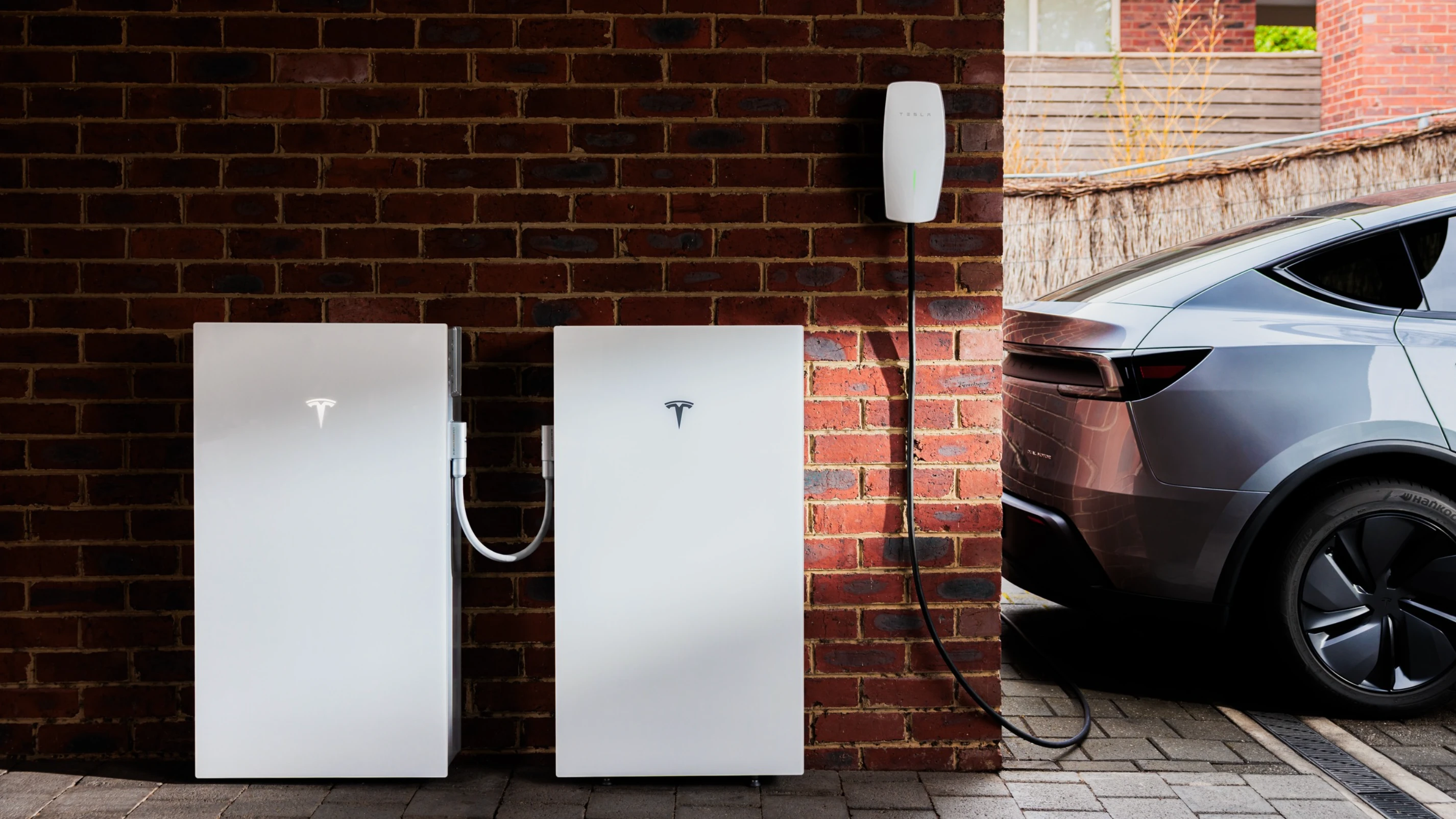
Derek’s starting recommendation is to size the home battery for appliances and backup needs, use surplus solar for the car, and consider suitable low-cost grid energy for the rest of its charging.
Charging a car from the home battery competes with cooking, cooling and other household use. Storing solar first and then transferring it into the car also introduces storage and conversion losses. Ask how the charger’s settings protect the energy intended for the house.
A larger battery may support both uses when the design and economics justify it. Derek’s concern is the extra capital tied up in stationary storage bought mainly to fill the car. Compare that cost with direct solar, suitable grid rates and charging available at other destinations.
Our battery-sizing guide explains how the home’s use and backup needs inform that separate decision.
The car supplying the home.
Derek also sees promise in energy flowing the other way: a car charged while parked at work could later contribute to the home. He sees the home system’s future role as an energy router, coordinating energy sources and retaining backup capability.
Vehicle-to-home needs a supported vehicle, bidirectional equipment and an approved design. Western Power requires compliant equipment and written connection approval. An ordinary charging outlet or a car’s portable vehicle-to-load socket does not establish that capability.
The installation conversation.
The charger is only part of the job. The switchboard, cable route and parking position determine what is practical to install and how neatly it can be done.
- Your car and routine
- Make, model, usual driving, when it is home and the time it needs to be ready. Include a second vehicle if one is planned.
- Your existing equipment
- Solar inverter and battery models, recent generation or export records, and the charging behaviour you want.
- Your switchboard and parking
- Clear photos taken from a safe position, the proposed charger location and the likely cable route. Keep covers in place and leave electrical inspection to the installer.
Ask the quote to identify the circuit and any board work, metering for solar control, load management, cable route and commissioning. Include the intended home-battery priority and how the charger will follow it. If solar, storage or a second charger is coming later, mention it while the work is being designed.
Bring those details to PSW and we can work through a charging setup around your home and routine.
Sources and review notes
- WA Government: household electricity pricing. A1 usage rate current from 1 July 2026.
- Synergy: DEBS pricing schedule and WA Government: energy buyback schemes. Check the arrangement on your bill.
- Synergy: EV Add On. Rates and eligibility checked on the live retailer page, 9 November 2026.
- Australian Government YourHome: battery efficiency and storage losses.
- Western Power: bidirectional vehicle connections.
- Tesla Australia: Charge on Solar and Wall Connector charging speeds and installation.
- Fronius Australia: surplus charging and control components. Manufacturer examples illustrate different approaches, not universal compatibility or PSW stock availability.
Originally published 10 September 2026. Editorial draft reviewed 9 November 2026, with firsthand charging advice and the workplace example supplied by Derek McKercher. His energy-router discussion is a future outlook, not a product-availability claim. Tariff calculations are illustrative; your rates, available surplus and equipment settings determine the result. Charging examples are explanatory, not an installation design.