


In this article
Two solar and battery packages can show the same panel size and battery capacity while allowing for very different work. The difference might be at the switchboard, in the cable run to the garage or in what will keep running during a blackout. Find those differences while you still have both quotes in front of you.
Start with the price for your address
An advertised package gives you a starting price. The quote for your property should describe the equipment and the work that price buys. Ask what the seller has allowed for at your address and which parts of the job still need checking.
Start with what you want the system to do. Look at how much electricity you use after sunset, how much spare solar the system could leave for charging and what you want to keep running in an outage. Give each seller the same brief so you can compare the designs on the same basis. Work out how much battery your household needs.
From a few photos to a fixed quote
PSW starts most assessments remotely. A recent electricity bill from Synergy or your retailer gives us a starting point for your usage. Photos help us see where the equipment might go and what work is likely to be involved. When those details are clear, we can price the job without adding the time and cost of a visit.
Send a photo of the switchboard as it’s normally accessible, a wide shot of the proposed battery location and any accessible areas between the two. If you already have solar, include the inverter model or a clear photo of its label. Take photos from a safe position and leave electrical covers in place.
Site visits for complex installations
PSW usually visits multi-level homes before committing to a fixed price. A roof can look straightforward from above while safe access, mounting or the cable route between floors still needs checking. An older home with possible asbestos in its fibrocement cladding can also need a closer assessment. Flag suspected asbestos so it can be assessed before anyone disturbs the material. See WorkSafe WA’s guidance for homeowners.
For a battery, the proposed location and the structure that will support it can change the job. The installer needs to check what the battery would be mounted on, whether the crew can work safely there, and whether the location meets installation requirements and the manufacturer’s instructions. If those details need checking on site, allow time for the visit before expecting a fixed price. See the home battery placement guide.
Put the quotes side by side
Ask each seller to separate work that’s included, work that’s excluded and work they still need to assess. A battery on a nominated garage wall is a useful example.
- Mounting and cabling included
- The price covers the agreed garage wall and the full cable run from the switchboard.
- Installation still to be priced
- The wall and cable route still need checking before the seller can price that work.
Ask both sellers to price the same location before you compare the totals.
Four lines to check on every quote
- Equipment and backup
- Exact panel, inverter and battery models, array size, usable battery capacity and the circuits included if backup is part of the design.
- Work at your home
- Roof access, the battery location and what it mounts to, cable routes, switchboard work and any metering needed.
- Total and exclusions
- The GST-inclusive installed total, each incentive credit and the work that’s excluded or still needs a price.
- Handover and support
- Connection and commissioning responsibilities, monitoring setup, paperwork and the contact for aftercare.
See what changes your installation price for examples of work that can sit outside a base package.
Read the incentive lines separately
Ask to see the installed price before incentives, each credit the seller expects to apply and your out-of-pocket total. The federal battery certificate discount and the WA Residential Battery Scheme rebate have different rules. Ask which eligibility and installation timing assumptions the quote uses and what happens to your price if one changes.
If your quote assumes the WA rebate, check which eligible virtual power plant (VPP) you would need to join, when it can use your battery and what you receive in return. Our WA battery rebate guide explains the timing and where to check both schemes.
Confirm what can go back to the grid
Ask how the proposed system would connect to the grid at your address, what export limit the design assumes, and who handles the application and commissioning. Check what the quoted price or design depends on if the approval comes back with different conditions. See WA’s connection requirements.
Your export limit controls how much power you can send to the grid. Your retailer’s buyback terms determine what that exported energy earns. If a quote includes a savings estimate, ask how much it assumes you’ll use at home and how much it assumes you’ll sell back. See WA’s energy buyback scheme guidance.
Know who’s responsible for the work
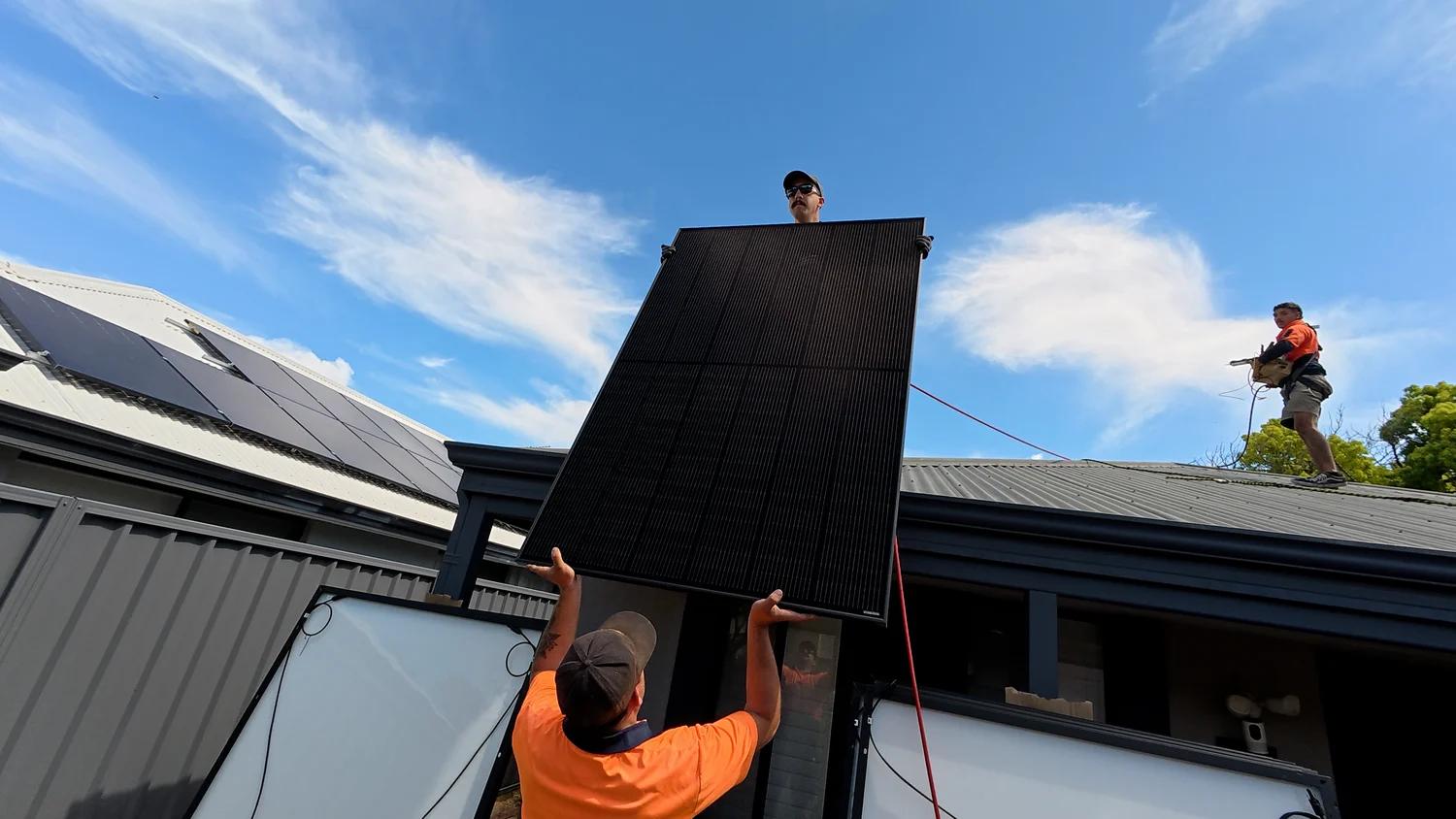
Find the business named in the agreement and ask which electrical contractor will do the work. Check the WA electrical contractor licence and the installer’s relevant solar and battery accreditation. Ask whether they’ve worked on homes built like yours and who you’ll call if commissioning, monitoring or a warranty claim needs attention afterwards.
Before you pay a deposit
“Staying power is key before paying a deposit.”
 Derek McKercherElectrician, founder, and director, PSW Energy
A long trading history is a useful clue. Look for evidence of how the business handled a fault or warranty claim years after installation. An experienced local team can also tell you which parts of a job they can check remotely and which need to be seen in person. See what staying power looks like in a Perth solar company.
Read the quote alongside the agreement. Check the quote expiry, deposit and payment dates, expected installation timing and how any changes to equipment or scope will be agreed. Keep a copy of what you accept.
If extra work is discovered, ask for the reason, revised scope and price in writing before agreeing to it. WA Consumer Protection explains how to handle extra work.
Sources and further reading
- ACCC · Comparing solar and battery quotes
- WA Consumer Protection · Quotes, deposits and extra work
- WorkSafe WA · Asbestos guidance for homeowners and tenants
- Building and Energy · Residential battery systems consumer advice
- Clean Energy Regulator · Federal battery certificate eligibility
- Energy Policy WA · Residential battery scheme eligibility
- Energy Policy WA · Connection requirements
- Energy Policy WA · Energy buyback schemes
- Building and Energy · WA electrical licensing register
- Solar Accreditation Australia · Installer accreditation check