
In this article
For many homeowners, solar becomes part of their biggest investment. The way it looks on the roof deserves a place alongside power, construction and warranty.
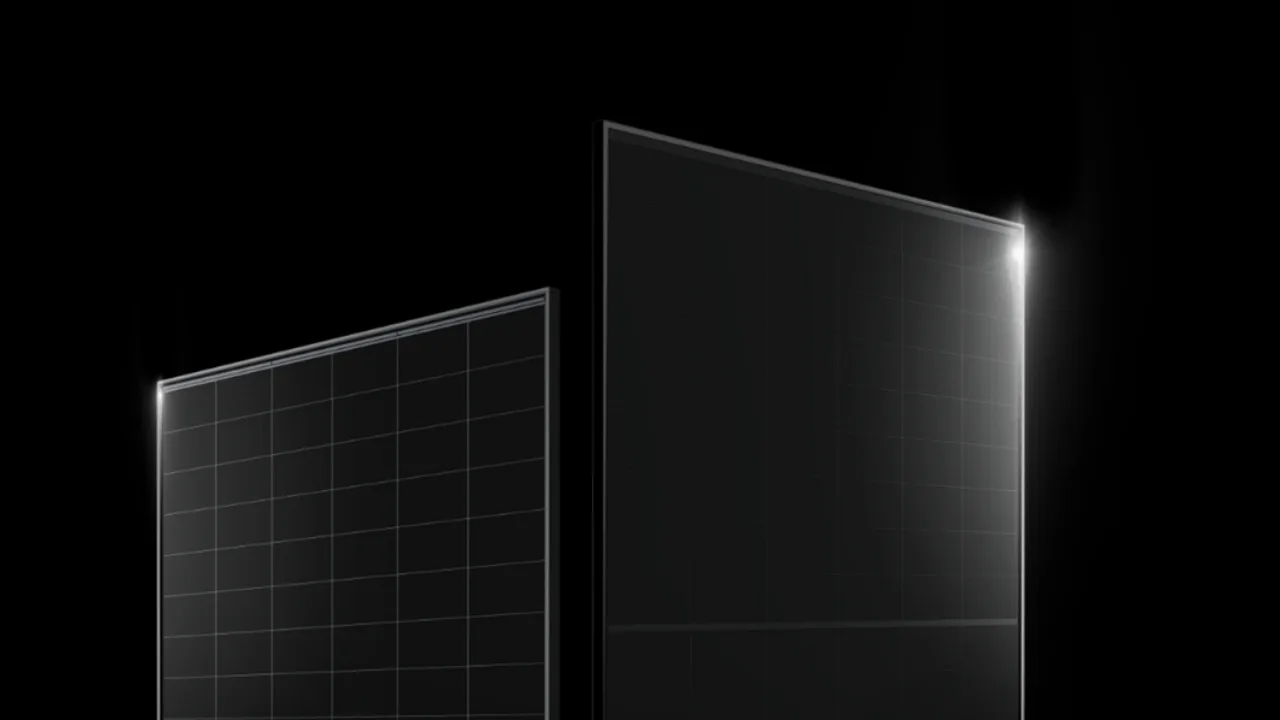
This comparison covers two mono-glass models: the all-black NeoStar 3S54 at 490 W and the white-backsheet NeoStar 3P54 at 500 W. Their construction, weight and warranty terms have much in common. The finish and rated output are the main differences to weigh up.
The 3S54 and 3P54, side by side
Both use 108 N-type back-contact cells and share a 1,762 × 1,134 × 30 mm footprint. Each has 3.2 mm tempered front glass, a backsheet and a black anodised aluminium frame.
NeoStar 3S54
AIKO-A490-MCE54Mb
490 W
- Efficiency at STC
- 24.5%
- Appearance
- All-black face
- Construction
- 3.2 mm front glass + backsheet
- Weight
- 20.6 kg ±3%
- Power temperature coefficient
- −0.26%/°C
- Product warranty
- 25 years
- Performance warranty
- 30 years
NeoStar 3P54
AIKO-A500-MCE54Mw
500 W
- Efficiency at STC
- 25.0%
- Appearance
- White visible between cells
- Construction
- 3.2 mm front glass + backsheet
- Weight
- 20.6 kg ±3%
- Power temperature coefficient
- −0.26%/°C
- Product warranty
- 25 years
- Performance warranty
- 30 years
Manufacturer-declared ratings for these exact models. Warranty terms and the documents supplied with your quoted module apply. Availability is confirmed when quoting.
Put the extra 10 W in context
With a fixed number of panels, the 500 W model gives you more rated capacity. Across a whole roof, the difference is easy to calculate.
Illustrative array comparison at standard test conditions: 14 × 490 W = 6,860 W; 14 × 500 W = 7,000 W. This is a capacity calculation, not a forecast of annual generation or savings.
See the panel detail

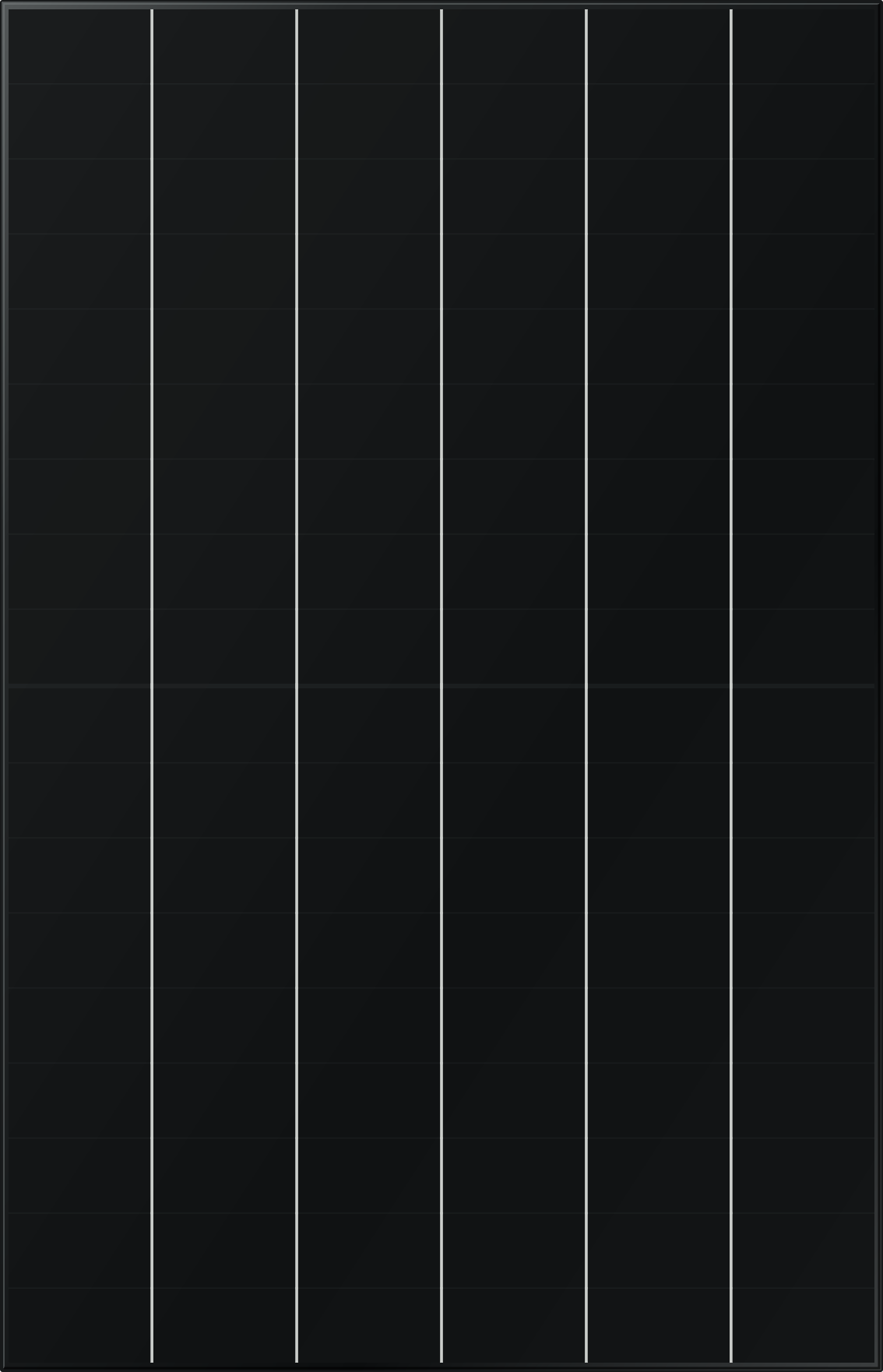
Front-view illustrations follow AIKO’s 1,134 × 1,762 mm dimensions, 108-cell layout and product artwork. Frame depth is 30 mm. Surface colour and reflections vary in real life.
Annual energy production depends on the roof direction, shade, temperature and inverter limits. Ask for an estimate using the same roof layout and assumptions for each panel. That makes the extra cost easier to judge.
Black panels. Black mounting hardware.
The 3S54 has an all-black face with no front-facing contact grid. Pair it with all-black mounting hardware and the array has a more consistent finish across the roof. That combination is central to Derek McKercher’s preference for the all-black AIKO panel.
“I really like the all-black AIKO solar panel … especially when we pair it up with all-black mounting hardware on the roof.”
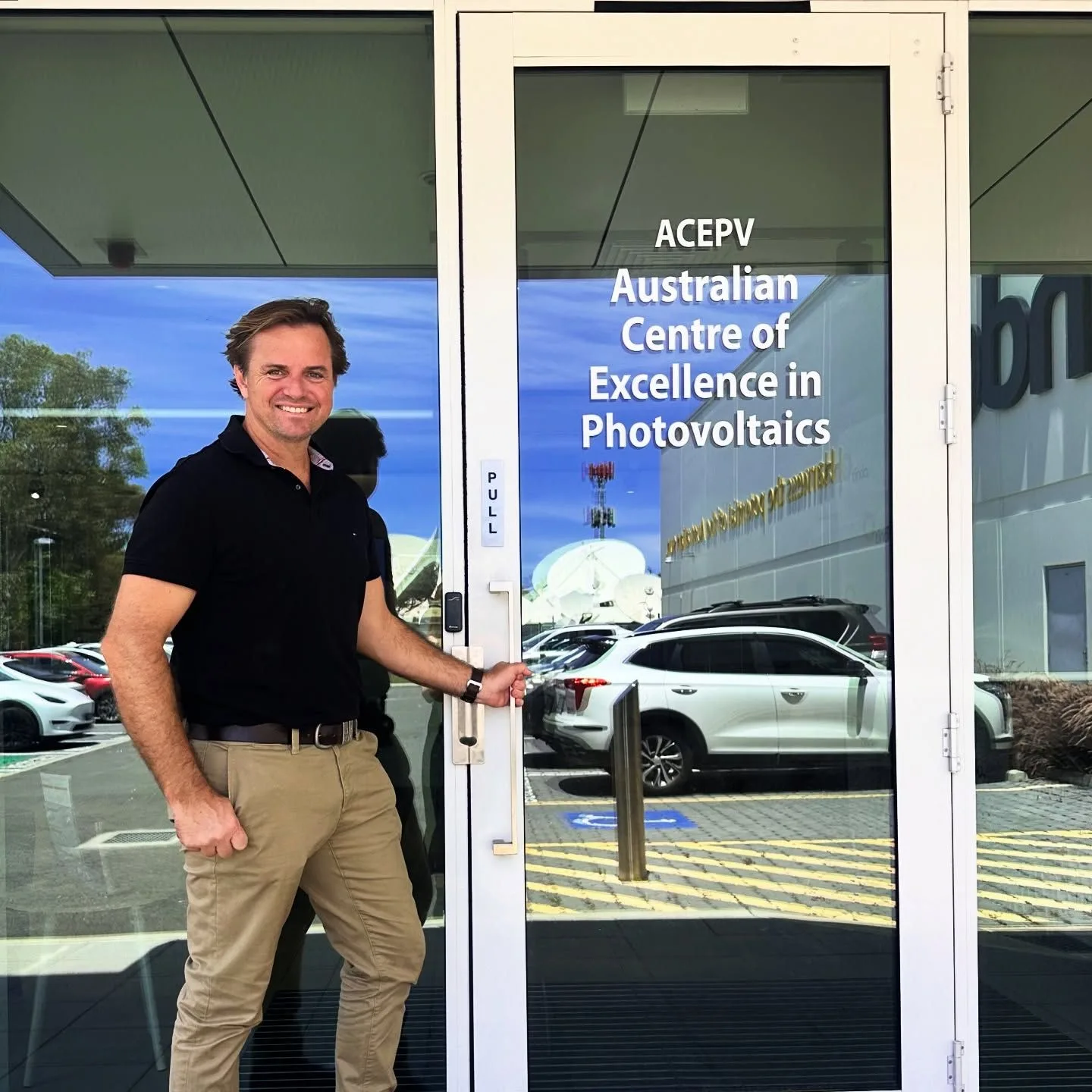 Derek McKercherElectrician, founder, and director, PSW Energy
For Derek, that consistent finish feels more timeless. He sees the attention to detail as part of looking after the home, including how it presents if you eventually sell.
The 3P also has a streamlined appearance, with a white backsheet visible between its cells. The choice is worth seeing on a roof, especially if the array will face the street or a part of the garden you use every day.
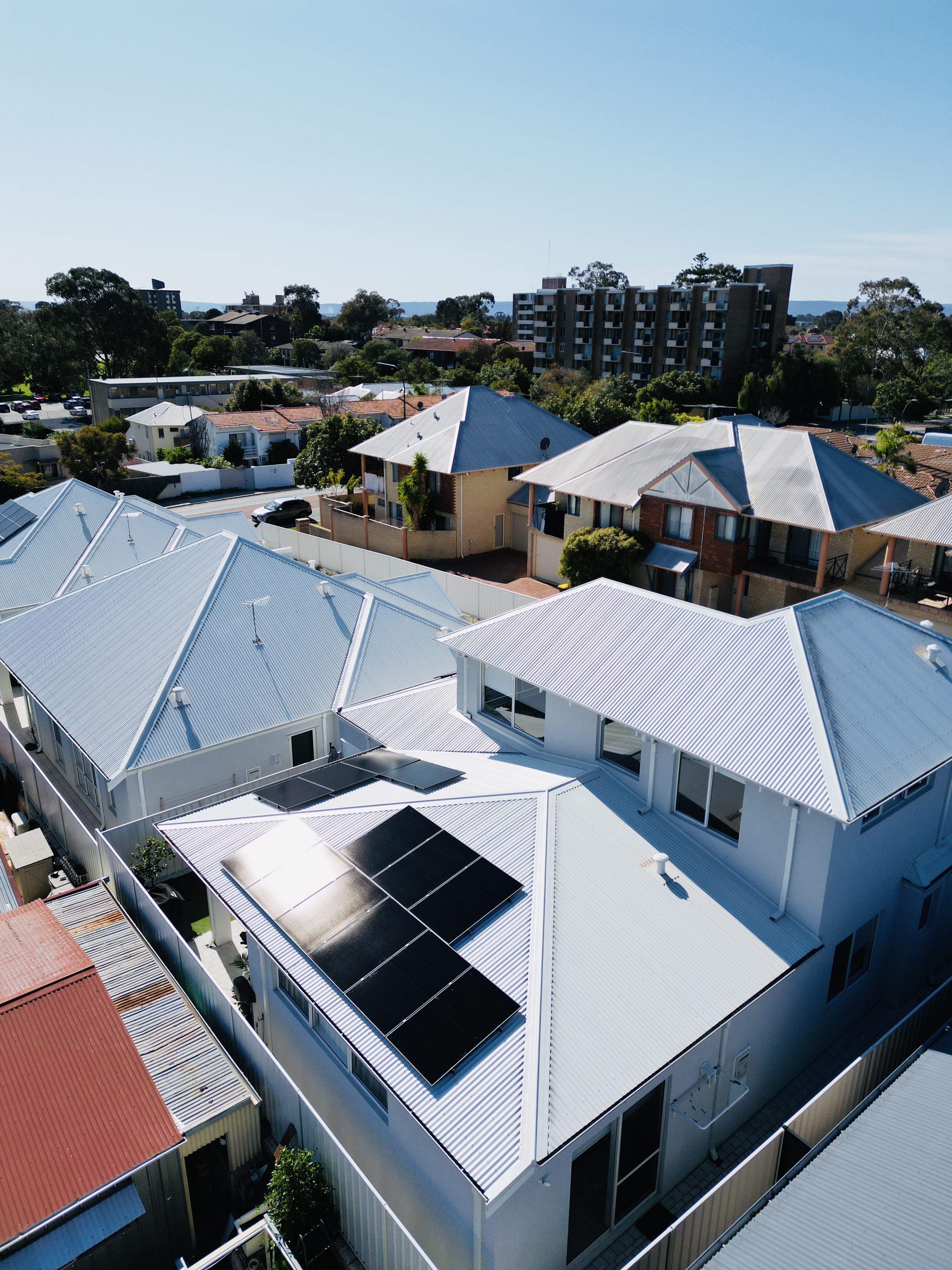
Roof shape can also settle the choice before wattage does. A layout that fits another panel may change the result more than moving up a single power class. Ask to see the layout before choosing from the headline rating.
Read the cover and the test conditions
Product cover and output cover do different jobs
Both AU sheets list 25 years of product cover and a 30-year performance warranty. The performance schedule reaches a minimum 88.85% of rated output at year 30. That is a manufacturer warranty threshold, not a prediction of your electricity bill or annual energy yield.
Both models list the same power temperature coefficient: −0.26%/°C. At the same cell temperature, their rated power falls by the same percentage as the cells heat up. Actual operating temperatures and annual energy production still depend on the roof conditions and system design.
AIKO also lists partial-shading optimisation; shade still needs to be accounted for in the system design.
Both reviewed AU sheets list IEC Class C fire ratings and a hail test using 40 mm ice balls at 27.5 m/s. For coastal or high-wind sites, ask for the exact module’s installation limits and supporting certificates. The panel, mounting system and roof need to be assessed together.
Compare the finish, output and installed price
At these power classes, the 3P provides another 10 W per panel in the same footprint. The 3S offers the all-black finish. Both have the same listed construction, weight, warranty periods and power temperature coefficient.
Ask for the exact model, roof layout, installed price and estimated annual generation together. That gives you a useful basis for deciding how much the extra rated capacity or the all-black appearance is worth to your home.
Bring your roof into the comparison.
Explore the current AIKO package, or keep building the system around your home.
Sources and model notes
Reviewed 6 November 2026. Figures refer to the specific models and datasheet editions below; other NeoStar variants can differ.
- AIKO NeoStar 3S54 · MCE54Mb, AU-market V2.1, February 2025: the 490 W class in PSW’s current package. Manufacturer original.
- AIKO NeoStar 3P54 · MCE54Mw, AU-market V2.1, February 2025: the 500 W class. Manufacturer original.